The Book of Marble and Salt · Volume V
Iii
Kallipolis, the City of Argument
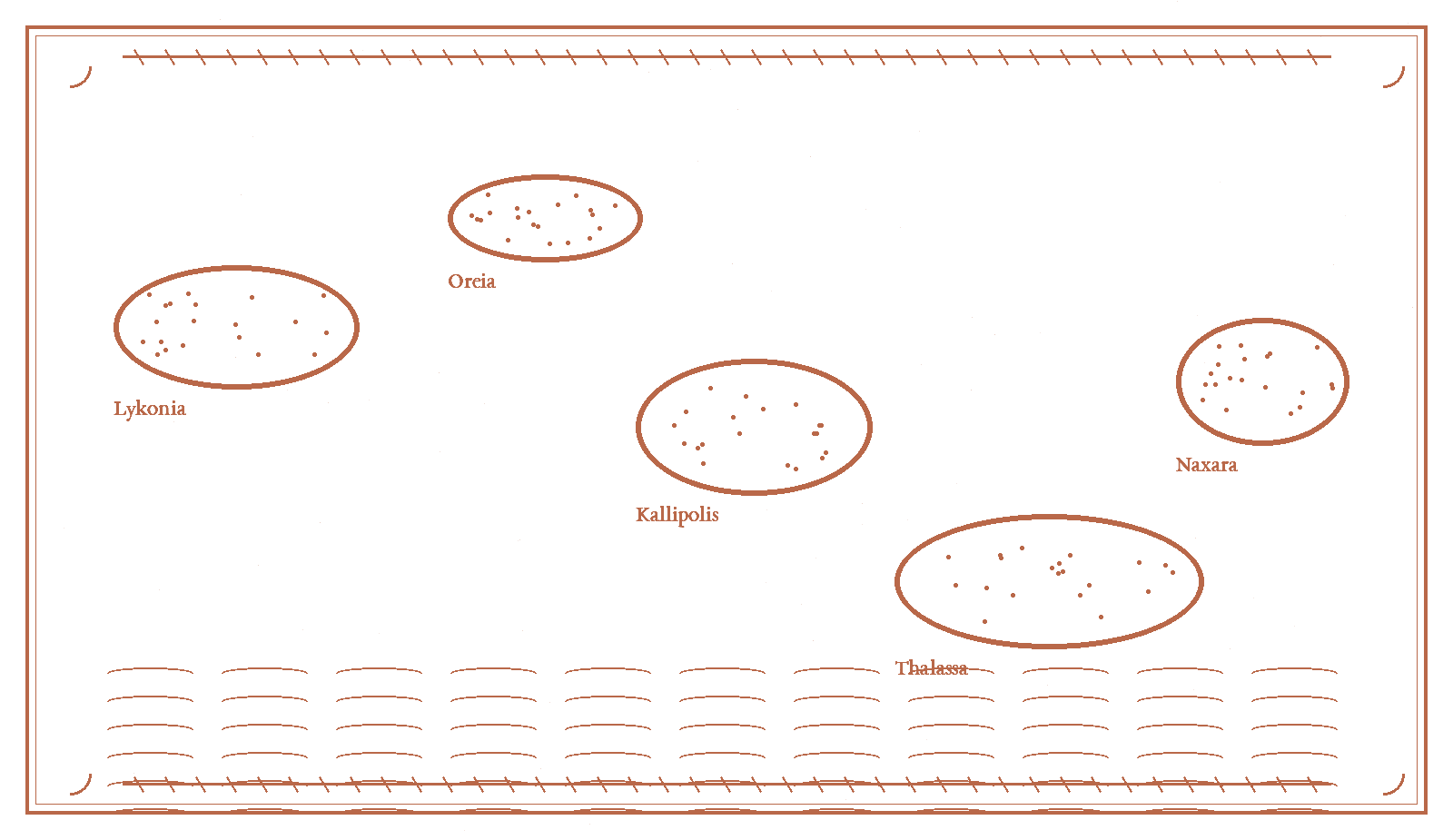
Kallipolis grants a public speaker a measured time before the council. A citizen may denounce a decree and leave without punishment; a debtor who has no recognized House may not always enter the chamber. Reformers call this contradiction the city's unfinished foundation. Conservatives reply that property holders bear the taxes and should choose how taxes are spent. The dispute has lasted longer than any councillor's life.
When the imperial envoy offered Kallipolis an unbroken coastal peace in return for permanent customs authority, the council divided. Some remembered pirates who had stolen children from the quay; others remembered the last imperial inspection, when a poor fisherman lost his boat for lacking a seal. The city eventually accepted limited patrols while refusing the permanent tax. No one could say whether this was compromise or cowardice, and that is why the story belongs in a history rather than a victory song.
The city's library keeps a damaged play whose chorus asks whether the man who defeats a tyrant becomes a tyrant at the moment of victory or only when he refuses to put away the sword. One line has been struck out in newer copies. An old bookbinder insists that the missing line contained a king's personal name. A Crown official says it was merely poor verse.